

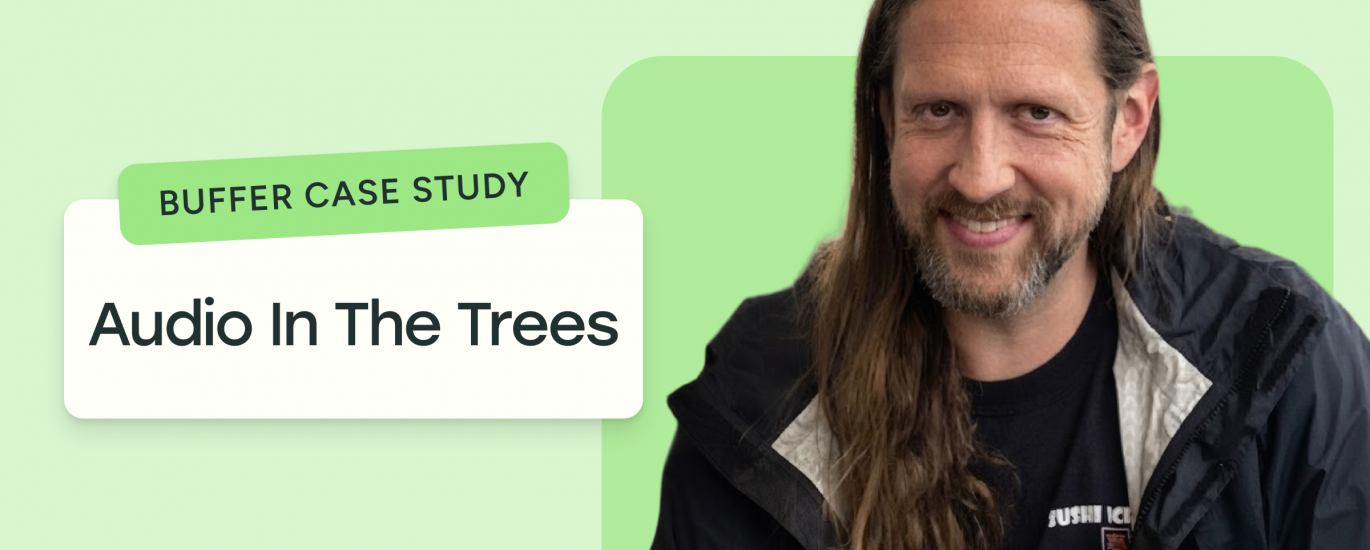
Jeff Simmons is a single dad, a self-professed social media addict in recovery (he quit scrolling Instagram and Facebook for personal use on January 1), and he runs a boutique digital marketing agency out of Portland, Oregon, called Audio in the Trees.
He’s also been a paying Buffer customer since 2012.
“I’m by no means your standard agency,” Jeff says. “I’m just one of those social media obsessives out there who turned it into a living.”
Jeff’s specialty for most of that time has been music venues. He describes the content as the kind most social media managers would consider quite “sexy.” More recently, he’s expanded into bars and restaurants, which come with their own kind of content challenges. (We’ll get to that.)
Today, Jeff manages 23 channels across a dozen clients. The business has expanded and contracted over the years, and Buffer has been part of every chapter.
Customer Snapshot: Audio in the Trees
Industry: Boutique Digital AgencyLocation: Portland, Oregon, USAChannels managed: 23Team: Jeff + contractors and internsBuffer customer since 2012Key Buffer features: Scheduling, PDF reports, team collaboration
Zero approvals (almost)
Buffer has approval workflows built for exactly this kind of agency-client setup — you can have teammates create drafts, route posts for sign-off, and control who’s allowed to publish what. Plenty of agencies run their whole operation on them.
But Jeff just isn’t one of those agencies.
In fact, he prefers not to use approval workflows at all. He’s built his entire client model around pre-approved content strategies, and it’s something he feels really strongly about.
“If we’re rock solid on our content strategy, you do not need to approve things,” he says. His assistants get full access to their assigned channels in Buffer, and Jeff checks in with them monthly. He doesn’t hover over their posts because he doesn’t want them second-guessing themselves on organic content. That confidence is part of the service.
There is one interesting exception, though: photo booths.
Jeff’s newer bar and nightclub clients generate a lot of user-generated photo booth content, and some of those photos need a second pair of eyes for reasons that are… specific to nightlife. One venue had what Jeff calls their “Coldplay moment” — a photo booth shot that went viral prompted a frantic Friday-night call to take it down.
For those situations, Jeff sends screenshots of the queued Buffer posts to the client via email. His clients would rather glance at a few screenshots than learn a new tool. It’s unglamorous, but it works.
Hamburgers, photo booths, and a PDF
Instead of building separate slide decks or pulling numbers into spreadsheets, Jeff anchors his monthly client conversations around Buffer’s PDF reports.
“Boy, do I love that PDF output,” he says. “For most of my clients, that’s the simplicity they need. They don’t want overwhelming stats.”
The reports do the selling for him. One of his bar clients had been posting event flyers to mediocre results, so Jeff switched the strategy to food photos and photo booth content. Seeing the meteoric rise in engagement numbers in the next month’s PDF made the value he provided super clear.
“They’re just blown away,” Jeff says. The way he tells it, his clients can’t quite believe that posting pictures of hamburgers and photo booths turned them into the most popular place in town.
This summer, Jeff took on the largest single-client rollout he’s ever managed: eight social channels under one brand, Human Creator Project, with two interns helping manage community engagement. It happened to coincide with Buffer’s launch of its new Insights dashboard.
Buffer’s new Insights dashboard
“Being able to monitor performance across all eight channels from one dashboard has made a huge difference,” Jeff says. The strongest engagement and growth are coming from platforms that agencies don’t always prioritize first — TikTok, LinkedIn, and Threads — and having that visibility across everything in one place is what lets him spot it.
After 14 years, Jeff’s agency is running more channels, with more people in Buffer, than it has in a long time. The tool he’s relied on since 2012 is still shipping features that change how he works.
A Buffer sticker in a Portland cafe
Back in 2017, Jeff spotted a Buffer sticker on a stranger’s laptop in a Portland cafe, so he walked up and started talking about it. The stranger turned out to work at Buffer.
“You guys pull it off by being community-oriented and transparent about business practices,” he says. “You can tell it’s intentional.”
He watches scheduling tools come and go, and clients still turn up using ones he’s never heard of. Buffer keeps working, but what’s kept Jeff around for 14 years is that it keeps changing, too.
Running social for multiple clients? Buffer gives agencies one place to manage every client’s channels, from scheduling to client-ready reports. See how Buffer works for agencies.