
You can have an impressive website, great content, and a seamless user experience.
But you might still be invisible to search engines and AI tools.
That’s because Google and ChatGPT don’t just look at your website. They also look at what other credible sources say about your brand to understand who you are and whether they should rank or recommend you.
Every time a trusted publication, community, or expert mentions your brand, it builds credibility for your business.
In this guide, I’ll cover why brand mentions matter in more detail, and I’ll give you four ways to earn more high-value mentions to boost your visibility.
I’ll also show how to track these mentions and report ROI to leadership.
What Are Brand Mentions?
A brand mention is any reference to your brand by a third party. It could be in an article, a community thread, a YouTube video, a podcast, or anywhere else online.
You can build two main kinds of brand mentions: linked and unlinked mentions.
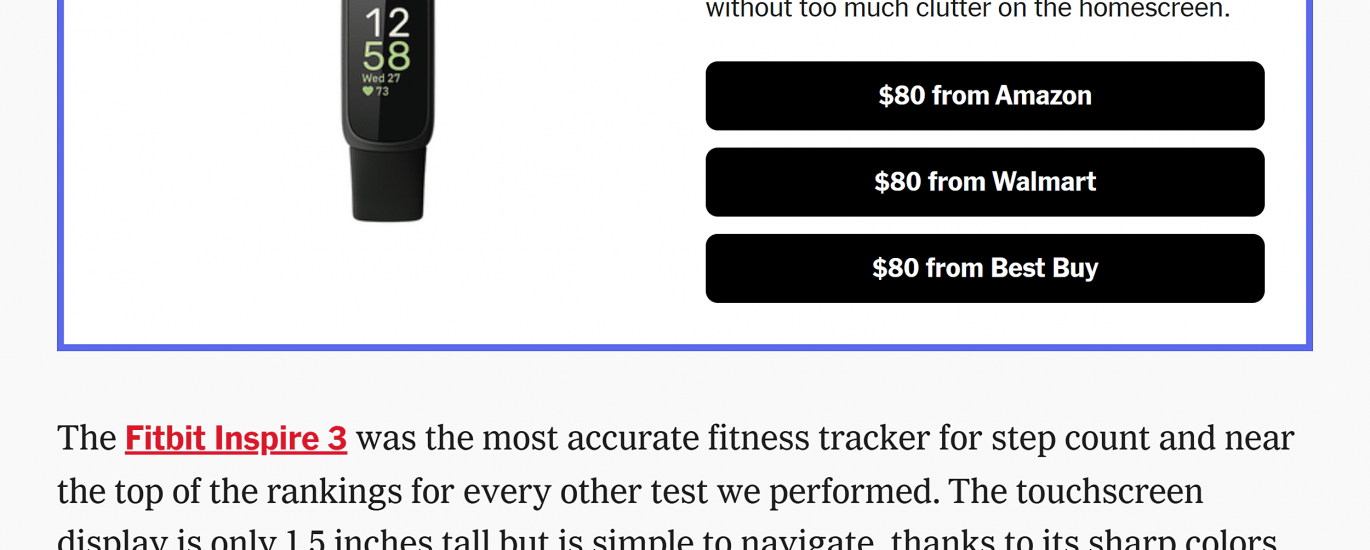
Linked mentions include a clickable link to your website along with your brand name. For example, this article mentions Fitbit and links out to the brand’s product page.
Unlinked mentions refer to your brand without any links. For example, this Reddit user mentions Fitbit but doesn’t add any links to the brand’s website.
The key difference: Linked mentions can pass authority and referral traffic to your domain. Unlinked mentions help establish brand context for search engines and AI systems, without the direct traffic benefit. Both are useful.
Web vs. LLM Brand Mentions
Brand mentions on the web aren’t the same as getting brand mentions in AI search. Like when ChatGPT mentions your brand in its response to a user’s question.
For starters, LLM mentions vary for individual users based on their personal context, browsing history, and other factors. And they don’t exist outside of those conversations — nobody else sees those specific mentions.
In contrast, a web mention is static and shows up the same way to potentially thousands of users.
Getting mentions in AI responses is more like the goal, while getting brand mentions across the web is one of the ways you can reach that goal. Since the more consistently you appear in trusted, relevant sources, the more likely you are to show up in AI search results.
So in this guide, we’re focusing on web brand mentions. For more on getting mentions in LLMs specifically, check out this article on building AI mentions.
Why Brand Mentions Matter Now More Than Ever
Brand mentions have always played a part in gaining online visibility. But here’s why they matter even more right now:
They Signal Authority to Search Engines
Search engines evaluate your brand in part based on what the wider web says about you.
They consider who mentions you, in what context, and whether those mentions are consistent.
For example, Google recognizes brands as distinct entities in its Knowledge Graph, a database that maps relationships between people, companies, topics, and concepts.
Brand mentions are one of the primary ways Google builds and refines that entity-level understanding of your brand.
They Expand Your Visibility to New Audiences
When a website, podcast, or community thread references your brand, you become visible to a whole new audience.
That’s how brand mentions can help you reach people who aren’t actively looking for you.
Take this video by The Budget Dermatologist as an example.
The video recommends better-value alternatives to a well-known skincare product. It mentions a brand called Timeless and explains why it’s a good alternative.
In the comments, people share how they purchased Timeless after discovering the brand through this video.
In this example, the brand mentions in the video can provide useful signals for search engines and LLMs, while also influencing purchases from an audience the brand might not be directly targeting.
They Help LLMs Understand and Feature Your Brand
When LLMs recommend your brand, they’re largely drawing on language from trusted sources where your brand is mentioned across the web.
Here’s proof of this in action:
An article on the Six Minute Mile website describes the Adidas Adizero Evo SL with wording like “elite-level performance in a lightweight, no-frills package” and saying they’re ideal for “workouts and long runs.”
When Claude talks about the same shoe, the LLMs describe it in almost identical terms.
So, brand mentions on websites can be repeated almost word for word by AI tools in their responses to users.
What Makes a Good Brand Mention?
Three factors determine the quality of a brand mention: authority, relevance, and specificity.
Authority
Authority refers to the credibility of the source where you’re mentioned.
Being mentioned in highly credible sources matters because:
It shows up in places your customers are likely to be looking
AI systems and search engines may put more weight on mentions from these sources
A feature in a trusted industry publication sends a stronger signal than a vague reference on a low-traffic blog with no topical relevance.
Let’s look at two good examples of high-authority mentions for SteelSeries, a gaming accessories brand.
This brand was mentioned in:
Wirecutter article: Highly credible website with in-depth reviews
IGN’s YouTube video: Popular channel with high topical relevance
Relevance
Relevance for brand mentions works on two levels:
Context: Are you mentioned in the relevant topical context?
Source: Is the source that’s mentioning you also connected to your industry?
If you’re mentioned in an article covering a theme you want to be known for, it strengthens your topical authority.
It’s also important that the source where you’re mentioned is also relevant to your industry.
Reformation, a fashion brand, represents a great example of this.
The brand is mentioned in articles on outfit ideas and sustainable fashion — themes that align with its positioning. Both these mentions also come from fashion-centric publications.
Specificity
Specificity is the third critical aspect for the quality of brand mentions.
A genuinely helpful mention shares specific insights like:
Who you are
What you do best
Why customers should choose you over others
That’s exactly what this Reddit post does for Descript, a video editing tool:
The post discusses the tool’s standout features and specific use cases.
As a result, search engines and AI systems get clear, usable signals about what Descript does and what it’s best for. These kinds of brand mentions help them understand when and where to rank or recommend Descript to users.
4 Tactics to Earn Valuable Brand Mentions
Now that we know how brand mentions can benefit your business, let’s turn to the bigger question: How do you earn brand mentions consistently to reap all these rewards?
Here are four tactics for building brand mentions regardless of where you’re starting from.
1. Create Data-Driven, Citable Content
Original research is one of the most reliable ways to earn brand mentions. And it keeps working long after you hit publish.
When you present original research around a question your industry is actively debating, mentioning your brand becomes the only way to cite that data.
SparkToro research, in partnership with Datos, presents a great case study here.
The research answered a question that is hotly debated in the SEO community right now: what share of searches happens on Google compared to other platforms?
The key finding was that Google still accounts for just under 74% of searches, while ChatGPT has less than 3% share. This counterintuitive finding gave SEOs and marketers evidence to anchor their arguments.
As a result, practitioners cited this study and mentioned Sparktoro across multiple platforms, including news articles and Reddit threads.
(A bonus of this method is that you also often pick up quality backlinks, too.)
How to Do This for Your Brand
First, go where your audience actively discusses their concerns and queries. This could be Reddit threads, industry Slack groups, and even your own sales calls.
Look for the questions that keep coming up in these conversations, but for which there’s no evidence-backed answer. This is the question you’re going to answer with your research.
You can conduct research in a few different ways:
Run a survey: Works best when you have an existing audience or customer base to poll
Build an index: Works best when you have proprietary platform or product data that others can’t access
Conduct a controlled experiment: Works best when you can isolate a single variable and document it repeatably
Synthesize third-party datasets: Works best when public data exists but hasn’t been combined or reframed in a useful way
Before you hit publish, work backward and think about what would make your research asset easy for anyone to reference.
Asana’s State of AI at Work report is a great example of packaging original research well for citations.
Let’s break down why it’s so easy to cite:
Standalone headline: Find one specific insight or data point that summarizes your research. Asana leads with a striking one: Organizations aren’t fixing broken work; they are automating the chaos.
Section-level findings: Each chapter or section should have its own quotable claims. Asana’s report has five chapters, each focused on one theme with key insights around it.
Clear methodology: Your approach and sample size tell people how to attribute your research, like, “according to a survey of 300 B2B marketers.”
Thanks to this structure, Asana’s research data is easy to reference.
As a result, it has earned brand mentions from news outlets, industry publications, and LinkedIn users.
The report also gained 87 linked mentions from domains ranging from trade press to high-authority industry blogs.
Pro tip: Make your visuals easy to share. If your data is easy to screenshot, people can organically share the research and mention your brand.
2. Partner With Complementary Brands on Co-Created Assets
When two or more brands build a campaign together, every conversation about it mentions the brands involved in the same context.
AEO Conf 2026, co-hosted by Graphite, AirOps, and Webflow, shows how this plays out in practice.
This campaign brought together three complementary brands in the AI and web publishing space. Each brand serves a different slice of the same target audience.
Before the event, promotional posts from speakers and brand profiles generated mentions and visibility among each other’s audiences.
That meant that people who followed only one of these brands discovered the other two.
After the event, attendees posted recaps sharing their key takeaways from the conference. And each of these posts mentioned Graphite, AirOps, and Webflow together.
When the same brands are repeatedly mentioned together across independent sources, like in this case, LLMs start to associate them with the same topic.
This is called co-occurrence, and it’s one of the ways web mentions translate into LLM visibility.
How to Do This for Your Brand
Aside from hosting in-person events, you can also create co-branded giveaway campaigns.
They generate a high volume of brand mentions quickly in two ways:
Audience participation
Press coverage
Plus, a strategic PR push can generate more authoritative brand mentions beyond social media.
Poppi’s partnership with PopUp Bagels shows how this is done. The two brands co-created a limited-edition cream cheese flavor.
Creators and customers then posted about it on social media, tagging both brands.
The brands also ran PR around the launch. News outlets covered this campaign directly, creating high-quality mentions for each brand.
3. Feature Other Brands and Experts in Your Content
When you feature an expert or a brand in your content, they have a reason to share it with their audience. That earns you a brand mention and visibility in a community you didn’t originally show up in.
Slate, a platform designed for social media managers, nailed this through multiple interviews with Zaria Parvez, a leading voice in this space.
The brand first posted about a webinar highlighting Zaria’s insights.
Thanks to their long-term relationship, Zaria also shared a snippet of another interview she did with Slate. This post went out to her audience of 150,000+ LinkedIn followers, creating a high-value mention for the brand.
How to Do This for Your Brand
You can feature experts and brands in your content in a few different ways.
For starters, expert roundups are great for curating firsthand expertise from multiple contributors.
Be sure to pick a theme where your audience really needs expert insights, like our guide on choosing a digital marketing agency.
This piece features insights and advice from experienced marketing leaders for one specific question: how to choose a good marketing agency.
Benchmark reports are another good format for featuring experts.
Instead of just presenting data, invite experts to add their commentary and contextualize why the findings matter.
That context makes the report more useful. And it gives each contributor a reason to share it because their perspective is part of the story.
I found a great example of this in G2’s State of AI Sales Intelligence in Prospecting.
The report features experts from nine companies, including ZoomInfo, Cognism, and 6sense.
Each contributor shares practitioner-level insight to explain G2’s findings.
Interview series and podcasts work well because the format gives guests more room to demonstrate their expertise.
And when your content reflects someone’s expertise, they’re more likely to share it with their audience.
Klue, a competitive intelligence platform, takes this approach with their podcast “Coffee and Compete.”
Every episode is titled after the guest’s expertise.
For example, “Starting Your Win-Loss Program w/ Dylan D’Urso” is framed as an episode about Dylan’s expertise.
As a result, Dylan shares the premise of his episode and mentions Klue organically.
What matters across all these formats is how you feature each contributor.
A one-line quote buried in a list gives someone little reason to share your content. But a feature that genuinely puts the expert’s insight at the center of your piece makes it easier for them to want to share it.
Pro tip: Make it easy for contributors to share your content. Send them a ready-made asset, such as a pull-quote graphic or a short clip, that they can post directly on their socials.
4. Contribute Subject Matter Expertise Through Digital PR
Contributing your expertise to someone else’s platform is another great way to earn high-value brand mentions.
When a credible journalist quotes you or a creator interviews you and talks about your brand, your brand mention benefits from that outlet’s credibility.
An example of this comes from Kailey Bradt, CEO of Sonsie Skin, appearing on the Shopify Masters podcast.
Her brand was mentioned in the YouTube video description, chapter markers, show notes, and the Shopify blog. These are all useful potential sources for search engines and AI tools to pull from to understand what your brand does.
How to Do This for Your Brand
When pitching your expertise to any outlet, offer something genuinely useful to their audience, like:
A counterintuitive finding
A practitioner’s take on an emerging trend
A specific framework that challenges the status quo
For example, Ryan Anderson, CEO of Filevine, shared a specific practitioner playbook on the SaaStr podcast.
This brand mention comes from sharing what SaaStr’s audience wants to learn rather than what Filevine sells.
Remember that the outlet you pitch matters as much as your angle.
Chasing the biggest publications in your industry might not always be the right move.
A smaller, highly relevant outlet that your audience actively engages with can be just as effective (and sometimes more so).
Before pitching, map where your audience actually goes for information: whether that’s podcasts, publications, YouTube channels, or other similar channels.
Natalie Marcotullio, Head of Growth and Product Marketing at Navattic, provides a good example here.
She consistently shows up on specific channels that her audience (B2B SaaS marketers and PMMs) relies on, like:
In-person conferences like Above the Fold
YouTube channels like Product Marketing Adventures
Webinars and content assets with Navattic’s complementary brands
Each placement reached the same audience through a different context. And each one generated a high-value brand mention for Navattic.
How to Track and Report on Brand Mentions
To build a repeatable strategy for brand mentions that actually improve your online visibility, you need to know:
Which tactics are paying off
Where you’re losing ground against competitors
How your brand mentions lead to business outcomes
Let’s look at three methods for tracking brand mentions across the web and in AI search.
I’ll also show you how to report on each one to present meaningful findings to your leadership team.
Google Alerts and Manual Searches
Google Alerts is the simplest place to start — and it’s free.
Go to Google Alerts and set up alerts for your brand name, including common misspellings, your product names, executive names, and your top competitors.
Set the frequency to “At most once a day” so you get a single daily digest instead of a constant stream of emails.
An important note: Google Alerts can miss many mentions.
The tool may not reliably pick up community forums, subreddits, or niche industry publications.
So, supplement these daily reports with a weekly manual pass. Search your brand name across Google News, relevant subreddits, and YouTube to catch what slips through.
How to Report This
Use Google Alerts data to track how many mentions you’re picking up each week or month, and note which sources and contexts are driving them.
Keep a separate list of your highest-authority placements.
A simple monthly summary might read: “This month we earned [X] brand mentions across [channels]. The highest-authority placement was [source], which reaches an estimated [audience size] monthly readers.”
That gives stakeholders a consistent number to track over time.
Plus, it creates a story about where your brand is showing up rather than how often.
Social Listening Tools
If you want to understand where and how your brand is mentioned, you need a social media monitoring tool.
Tools like Semrush Brand Monitoring, Brandwatch, or Mention track conversations across social networks, forums, blogs, news sites, and review platforms.
They give you context like:
What people are saying about you
Whether the tone is positive or negative
How your presence compares to competitors
With the Semrush Brand Monitoring app, you can filter brand mentions by keywords, sentiments, source (blog, social media, etc.), language, and other criteria.
How to Report This
Use social listening data to build a monthly summary of core metrics such as mention volume, sentiment, and source breakdown.
Your report could present insights like: “This month we earned [X] brand mentions across [channels]. [Y%] of mentions carried positive sentiment, with the highest concentration coming from [blogs/forums/social].”
If you ran a campaign during the reporting period, flag whether mention volume spiked and whether sentiment shifted alongside it to show how your work contributed to those results.
Dive deeper: See how your brand’s mention volume compares with competitors over time by tracking your share of voice.
Backlink and Mention Monitoring Tools
Use a tool like Semrush to track when new pages link to your brand.
Semrush’s Backlinks tool shows which pages link to your site. But not all of these are brand mentions, since some links might use non-branded anchor text.
To find backlinks that are also brand mentions, filter the results by anchor text.
Click “Add filter,” select “Anchor,” and enter your brand name.
This will show you only the backlinks where your brand name is in the anchor text.
How to Report This
Focus on two things when reporting this data:
The authority of the sites mentioning you
The diversity of your mention sources
A mention from a single high-authority publication is valuable. But a pattern of mentions across many credible sites can have a stronger impact on your AI search visibility.
A useful way to frame this in reporting is something like: “This quarter, we earned [X] new mentions across [Y] unique domains, including [list two or three notable ones].”
Make Your Brand Impossible to Ignore with Strategic Mentions
Brand mentions have always been a signal of trust.
When you show up consistently in trusted publications, expert roundups, and community conversations, search engines and AI tools learn to recognize and recommend you in the right context.
But the optimization process doesn’t stop there. Our AI optimization guide shares more tactical advice on how to show up consistently in AI search.
The post Brand Mentions in 2026: How to Earn and Track Them Across the Web appeared first on Backlinko.