
Most companies plan their 2026 marketing budget without knowing what actually worked in 2025.That’s how digital marketing efforts drift into “we’re doing a lot, but we’re not sure what’s driving results.”
A year-end digital marketing audit brings clarity before decisions get locked in. Not a surface-level review. A real audit process that connects metrics, strategy, and outcomes to business goals.
If you’re planning a 2026 digital marketing strategy, this is where it starts.
What Is a Year-End Digital Marketing Audit?
A year-end digital audit is a structured review of your digital presence, marketing activities, and performance metrics across key marketing channels.
The goal isn’t perfection. The goal is informed decision-making.
A strong audit helps:
Connect KPIs to revenue
Identify which digital marketing campaigns actually performed
Reallocate budget based on return on investment
Align marketing efforts with business goals and audience needs
Most teams track metrics. Fewer teams use those metrics to guide strategy. That gap becomes obvious at year-end.
1. How Healthy Is Your SEO Right Now?
SEO health determines how visible your brand is in organic search and how well your website supports your digital marketing plan.
A proper SEO audit should review:
Technical SEO issues impacting website performance
On-page SEO elements like headings, internal links, and content quality
Off-page SEO signals such as backlinks
User experience issues that affect rankings and conversion rates
SEO is not just keywords. It includes website functionality, search engine accessibility, messaging clarity, and how easily users move through landing pages.
Strong rankings without a clear user experience rarely convert.
2. Are You Visible in AI Search Results (GEO)?
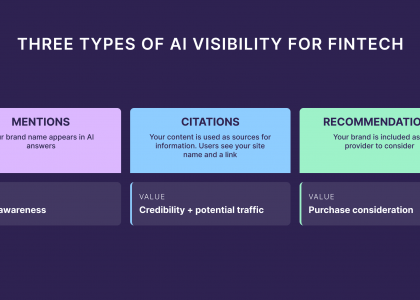
GEO visibility measures how well AI-driven tools understand and surface your content.
In practical terms, it answers one question: When someone asks an AI platform a question your business could answer, does your digital presence appear?
GEO performance improves when:
Content quality is high and clearly structured
Messaging reflects real audience needs
SEO foundations are solid across the site
GEO and SEO work together. Brands with strong website audits, clear digital strategy, and consistent content marketing tend to perform better across both traditional search engines and AI-driven discovery.
For 2026 marketing planning, this is no longer optional.
3. Is Social Media Driving Business Results?
A social media audit should measure how social media platforms support business outcomes, not just engagement.
What matters most is whether your social media strategy moves your target audience through the customer journey.
Key areas to review:
Brand awareness and reach
Click-through rates (CTR) to landing pages
Lead generation and conversion rates
Retention and long-term engagement
Social media should support broader digital marketing campaigns. If performance can’t be tied back to KPIs or business goals, the strategy needs refinement.
4. Is Paid Advertising Efficient or Wasteful?
Paid advertising should create momentum, not drain the budget quietly.
A paid advertising audit evaluates:
Spend distribution across each marketing channel
Click-through rates and cost per conversion
Contribution to lead generation or e-commerce revenue
Return on investment compared to benchmarks
Small budgets aren’t the issue. Fragmented budgets usually are.
Focused campaigns with clear performance metrics provide better insights and stronger outcomes for marketing teams of any size.
5. Which Content Is Actually Performing?
A content marketing audit identifies which assets support your digital marketing efforts and which ones aren’t contributing.
Content should be evaluated based on:
Organic search traffic
Engagement and time on page
Contribution to lead generation or sales
Alignment with audience needs and messaging
The strongest content balances education, authority, and direction. Content that builds trust without guiding action limits conversion rates. Content that sells without value limits reach.
Strategy matters more than volume.
6. Where Are Users Dropping Off?
Conversion path analysis shows where potential customers disengage.
Common friction points include:
Confusing landing pages
Weak calls to action
Poor mobile user experience
Too many steps before conversion
Small changes often improve conversion rates:
Clearer headlines
Better page scannability
More intentional messaging
Fewer distractions
Improving the customer journey doesn’t always require a redesign. It requires clarity.
7. How Do You Compare to Competitors?
A competitive audit reveals how your digital presence stacks up in your market.
Important areas to assess:
Search engine rankings and keyword focus
Content quality and topic coverage
Messaging and visual consistency
Gaps competitors are missing
Competitor insights often uncover simple opportunities that improve SEO, brand positioning, and campaign performance.
Your audience compares options whether you do or not.
Don’t Want to Run This Audit Internally?
That’s where we come in.
For teams that want clarity without guesswork:
Book a professional SEO audit
Or a full social media audit
Our audits go beyond surface metrics. They connect:
Performance metrics
Benchmarks
Rankings
Digital marketing strategy to clear, prioritized next steps.
These audits are especially valuable for teams that:
Need direction before scaling marketing activities
Want to align marketing campaigns with revenue
Need clarity before committing to larger digital marketing efforts in 2026
Turn Your Audit Into a 2026 Plan!
An audit shows you what’s happening. Strategy tells you what to do next. If you want help turning SEO, social media, paid advertising, and content data into a clear, focused digital marketing plan, our team at V9 can help. Connect with a V9 expert to prioritize what matters and plan smarter for 2026.
Frequently Asked Questions About Digital Marketing Audits
1. When Should a Digital Marketing Audit Be Run?
Late Q4 or early Q1, before finalizing your digital marketing plan and budget.
2. Is a Digital Audit Different From Reporting?
Yes. Reporting shows what happened. An audit explains why it happened and how to improve.
3. Do Small Businesses Need a Digital Marketing Audit?
Yes. Smaller teams benefit the most from focused marketing channels and clear performance indicators.
4. Should Email Marketing Be Included?
Yes. Email marketing audits should review open rates, click-through rates, automation flows, and contribution to lead generation and retention.
5. How Often Should Audits Be Done?
Light audits quarterly. A full website audit and digital marketing audit annually.