

The first day of classes, some students slouch in the back row, unprepared and uninterested. Some are up front, eager and ready. But it’s only the morning of the first day–these attitudes aren’t related to the teacher. It’s a pattern, one that is the result of culture, systems and personality.
Many of these students have been let down before, and it’s easier to be skeptical than to make a commitment, only to be disappointed later.
If it happens over time, it becomes part of how we see ourselves. And that person might end up in a job where they seek to do as little as possible and care less.
For good reasons, then, there are two sorts of attitudes people bring to work:
how much can I contribute, what can I learn, how do I make this count?
dread, ennui and a desire to do as little as possible.
For a great job or a committed teacher, it’s a shame if someone brings a failure attitude to work. They’re wasting a slot that someone else could have thrived in.
And for a lousy job, one that offers little dignity or possibility, we’re wasting all the potential of someone who seeks to contribute.
Getting the match right helps the organization and the worker as well.
Resumes give few clues about the attitude people bring to work. But finding the right match could save a lot of time and heartbreak.
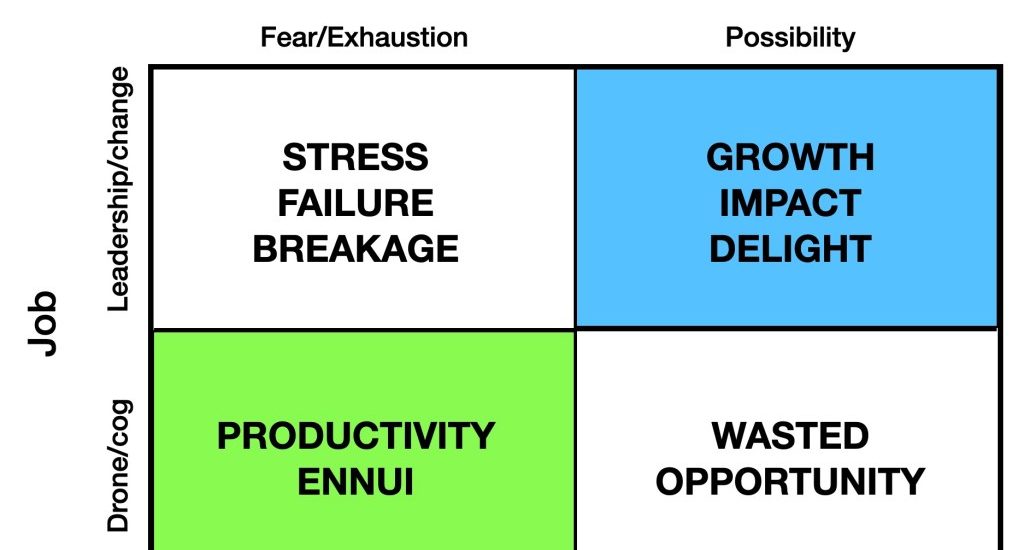
In the blue square, the right attitude meets the right job and magic ensues. In the green square, the assembly line moves on, and someone with a fearful attitude finds the job they can live with and dislike.
The othe two quadrants are tragic mismatches, where people and organizations are both disappointed.